1. Specific Massage Techniques for Muscle Groups
Techniques:
Swedish Massage – Improves circulation and promotes relaxation using long gliding strokes.
Deep Tissue Massage – Focuses on deeper layers of muscles to release chronic tension and muscle adhesions.
Friction Massage – Uses deep circular or transverse movements to break down scar tissue and improve flexibility.
Compression – Rhythmic pressing or squeezing of soft tissue to warm up and prepare muscles for activity.
Target Muscle Groups:
Leg muscles – Quadriceps, hamstrings, calves
Arm muscles – Biceps, triceps, forearms
Back – Erector spinae, latissimus dorsi
Neck and Shoulders – Trapezius, deltoids
2. Application of Massage Techniques Based on Competition Timing
A. Pre-Event Massage:
Duration: 10–15 minutes
Purpose: To stimulate muscles, increase circulation, and prepare the athlete physically and mentally
Techniques: Light compression, fast-paced effleurage, vibration
B. Post-Event Massage:
Duration: 15–30 minutes
Purpose: To reduce muscle soreness, enhance recovery, and decrease lactic acid build-up
Techniques: Slow effleurage, petrissage, light stretching, gentle friction
C. Stretching Combined with Massage:
Active stretching – Done by the athlete themselves
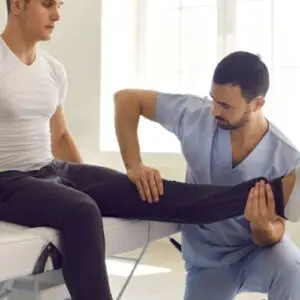
Passive stretching – Performed by the therapist to increase muscle flexibility
Stretching should be done carefully, especially post-competition, to avoid injury.
3. Proper Body Mechanics and Pressure Control
Maintain a neutral spine while working.
Use body weight instead of relying solely on arm strength.
Work from your core, not just your hands or wrists.
Move smoothly and rhythmically to ensure consistency.
4. Appropriate Use of Hands, Elbows, Fingers, and Forearms
Fingers & Thumbs – For precise, localized work (e.g., trigger points)
Palms – For broad, gliding strokes (e.g., effleurage)
Forearms – For deep, sweeping pressure over large muscle groups
Elbows – For targeted, deep pressure into tight areas (used with caution)
5. Therapist’s Posture and Injury Prevention
Stand with feet shoulder-width apart for stability.
Keep your knees slightly bent and avoid locking joints.
Adjust table height properly to avoid back or shoulder strain.
Regularly stretch and strengthen your own body to maintain physical health.
6. Sports-Specific Massage Techniques & Competition Preparation Guidance
Understand the demands of each sport to tailor massage techniques accordingly (e.g., runners need more leg work, swimmers need shoulder focus).
Collaborate with coaches and athletes to schedule sessions around training and competition.
Encourage athletes to hydrate, rest, and stretch before and after massage sessions.
Maintain clear communication with the athlete to understand their needs and pain points.
Special Promotion
Attendees will receive a free Canadian Association of Thai Massage polo while supplies last, available on a first come, first served basis.
Register for two workshops and save $75.